AI Nail Lamp OEM: What to Check Before Approving a Sample
A practical brief for nail brands: separate camera recognition from curing performance, then agree on interface, configuration and sample acceptance.
Start with the product your brand intends to sell
An OEM nail lamp project starts with a customer and a use case. A gel brand may want a lamp developed around its own system. A salon equipment distributor may need a product that staff can demonstrate and service. These briefs lead to different sample checks, even when the lamp housing is the same.
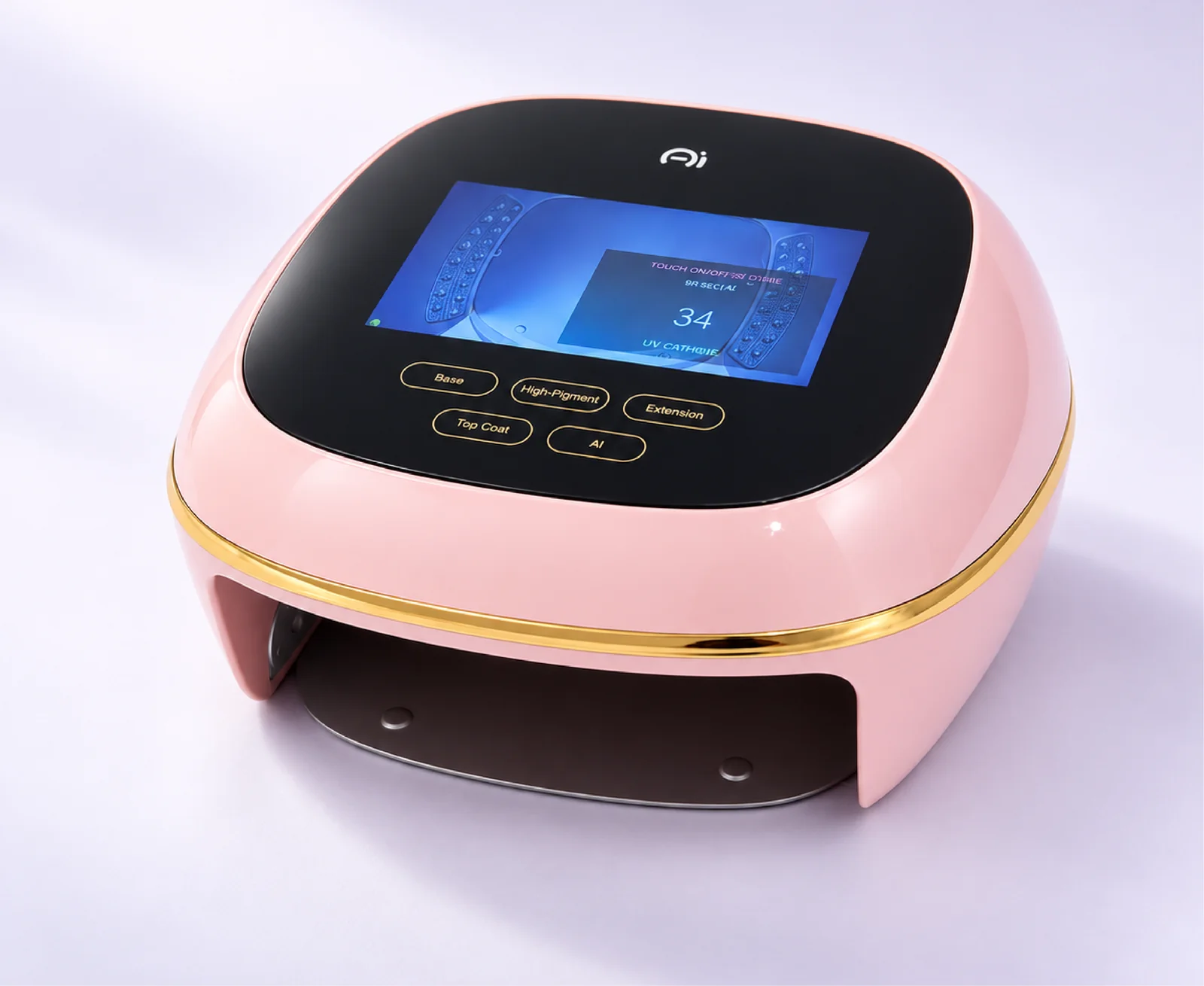
For the BeauTome AI Smart Nail Lamp V2, the supplied catalogue describes a camera-guided system with on-device processing and active LED zones. Use that description to organize a demonstration. Ask the supplier to show what the camera sees, what the interface reports and how light control responds.
Begin your brief with destination market, intended customer, expected quantity, target launch date and gel-system information. A clear brief is more useful than a request for the “best AI lamp.”
Separate recognition from curing
A detection-time figure describes a recognition step. It should not be presented as the time required to cure a gel. Likewise, an LED count or wavelength range is a product specification; it does not by itself demonstrate that every gel, shade or layer thickness has been validated.
Write down the gel products, layer thicknesses and settings used in your sample evaluation. Agree on the method and acceptance criteria with the people responsible for your product validation. Record unsuccessful tests as well as successful ones so that the final instructions reflect the actual approved use.
- Observe hand placement, thumb position and the recognition display.
- Check what happens if the hand moves during operation.
- Record the selected mode and the resulting cycle behavior.
- Request supporting evaluation for the specific system your brand will supply.
Make the interface part of the specification
A multilingual screen is useful only if the required language and wording are present in the actual sample. The V2 catalogue lists 29 languages and a 5.5-inch touchscreen. Identify the languages you need, then review the menu labels, help messages and terminology as your customer would see them.
Discuss whether your project needs interface branding, a different default language or a localized manual. Obtain confirmation of the changes that are feasible. Keep a record of the approved interface version alongside the product specification.
Use accurate product photography for the final listing. Catalogue illustrations can introduce the concept, but they should not be used as evidence that a particular screen, label or setting has shipped.
Specify the complete configuration
List the lamp, power adapter, cable, optional battery and printed material as separate items. The V2 reference includes an optional 6000 mAh battery; this is a configuration choice rather than a feature to assume on every order.
Confirm the adapter rating, plug, packaging language and documentation for the selected destination. Request model-specific records for review, with matching manufacturer, model and configuration details. Avoid treating a generic certificate image as the complete product file.
- Housing finish, logo location and product label.
- Screen language and interface version.
- Battery inclusion and compatible power components.
- Retail box, manual and shipping carton configuration.
- Sample approval and inspection points.
Agree on support before planning the launch
Ask how faults will be reported, how a sample issue will be reproduced and which components can be replaced. A brand launch needs a clear route for technical questions as well as a product story. Discuss what demonstration material and troubleshooting information can be supplied.
Record the approved sample identifier, configuration and written quotation. The current V2 product page gives a 500-piece OEM reference; customization scope, actual minimum quantity and timing must be agreed for your project.
Use the AI lamp overview to explore the product story, then send a focused sample brief. The best next step is a configuration your team can evaluate and approve.
The next step is an agreed sample and written specification. Tell us your market, quantity and product priorities.
Send a sample brief