A1 Hard Wax: Stock Supply or Private Label?
Choose a practical A1 buying route by comparing neutral stock bags, custom packaging, sample approval and repeat-order specifications.
Choose the buying route before choosing the bag
A salon replenishing its wax supply and a brand launching its first collection are buying the same type of material for different reasons. The salon needs a sample it can evaluate in its existing workflow and a clear route to reorder. The brand also needs packaging, artwork, product information and a recognizable presentation.
A1 rosin-free hard wax beads are offered through stock and private-label routes. Begin by deciding whether you need the existing neutral format or a pack developed for your own range. That choice determines the next questions about quantity, colour, artwork and timing.
The A1 name is a product code. It is written with the number 1 and is unrelated to the AI technology used in the nail lamp collection.
When stock supply is a useful starting point
The current A1 product page lists neutral 1 kg bags, twenty bags per carton. Its stock order reference is one carton. Gold, pink and off-white are existing colour references, but availability and the dispatch window should be confirmed at the time of quotation.
For a salon, start with an evaluation sample in the intended shade. For a wholesaler, consider whether that neutral bag format fits your customers and how you will identify the exact item on a repeat order. Record the colour, net weight, bag format and batch information rather than relying on a photograph alone.
A low first-order quantity can make a stock route practical. It does not remove the need to approve the product and confirm the supply terms.
When private label becomes the better brief
A private-label project adds your brand presentation to an agreed wax specification. Define the bag format, net weight, colour reference and artwork before discussing a print run. The current A1 OEM reference is 1,000 kg per colour; this is a planning reference and must be confirmed with the chosen scope.
Distinguish a packaging change from a formulation change. A new printed bag, a new colour and a different technical requirement are different development tasks. Describe which of them you need so that sampling and quotation cover the actual project.
- Brand name, logo artwork and target customer.
- Pack size and expected quantity per colour.
- Neutral, branded or custom-developed presentation.
- Required label languages and product information.
- Sample and launch timeline.
Use imagery to communicate, not to define stock
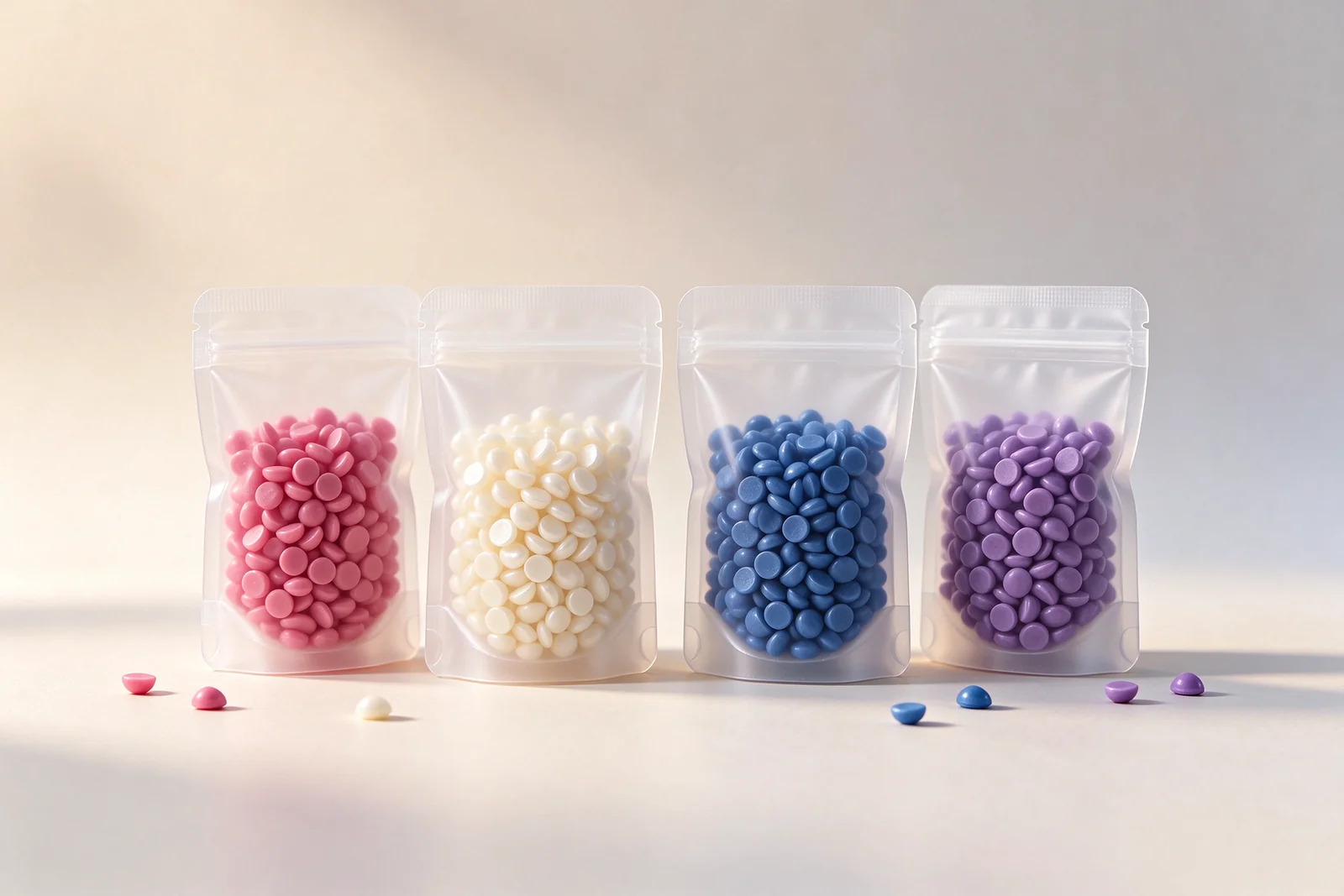
The collection imagery on this site shows an elegant pouch direction in pink, ivory, blue and lilac. These are visual references for a coordinated range. They do not establish that every illustrated colour is available as an A1 stock item.
Screen colour can also differ from the physical wax and printed pack. Review a wax sample and a print proof. Before preparing final listings, confirm that the photographs match the approved shade, bag construction, label and weight.
A good product image can make the range easier to understand. The purchasing specification still needs a written record of what is inside the bag.
Prepare the first-order and repeat-order record
Ask for the current product declaration and instructions for the exact shade and batch. Older material can contain different technical figures, so confirm the documents that apply to the sample you approve. A “rosin-free” description concerns the ingredient profile and should not be expanded into unrelated performance promises.
For repeat orders, retain the approved sample reference, artwork version, packing specification, carton quantity and quotation. A distributor may also want to identify how customers should refer to the product when reordering.
Use the A1 supply overview to choose your route. In your enquiry, include quantity, destination, shade, pack size and whether the bags need your artwork. These details let the conversation move directly to a useful sample and quotation.
The next step is an agreed sample and written specification. Tell us your market, quantity and product priorities.
Send a sample brief